
This article was originally published on the Automediat.com website
Digitalization has swept through society with great force in the 21st century, and even in the auto repair industry, paper files and calculators are already becoming a thing of the past. However, digital enterprise resource planning (ERP) systems still have a lot to offer in terms of streamlining the day-to-day operations and business efficiency of Finnish auto repair shops, says Ville Haka, Sales Manager at software company Confirma. What matters is not only the system itself but also how well it is utilized in practical work.
According to Ville Haka, the Finnish auto repair industry remains a fairly traditional sector—changes often occur more slowly than public discourse would suggest. Although there is already a great deal of talk about digitalization, practical work processes have not undergone as significant a transformation as in many other sectors.
– There haven’t been any major changes in how things are done. In repair shops, many tasks are still carried out the same way as before. Paper work orders have almost disappeared, but they can still be found here and there.
Larger repair shops already have some kind of system in place, but there are significant differences in how they use them. Smaller repair shops often lack such a system entirely, and this is exactly where Confirma can help. One of the key benefits of the system is the accumulation of service history, which facilitates both business operations and customer service.
According to Haka, in the auto repair industry, data must be retrieved from several different systems, so work efficiency depends on how well spare parts catalogs, work instructions, customer records, appointment scheduling services, and billing systems communicate with one another.
Digitalization in the Nordic Countries—The Main Goal Is to Generate Added Value
The software company Confirma currently operates in all the Nordic countries: Finland, Sweden, Norway, and Denmark. The same Confirma Quick3 system for the auto repair industry is used in all markets, but local organizations are responsible for operations in each country. In Finland, operations are managed by the Finnish organization.
Confirma’s Quick3 software did not originally have its roots in the repair industry. The company has long been active in the wholesale trade and in the recreational vehicle sector. Its customers have included, for example, snowmobile, ATV, and motorcycle dealerships that combine sales and service operations.
However, the limitations of the previous Windows-based system began to become apparent. During the development of the new Quick3 system, it was realized that it could also provide added value to the automotive aftermarket, particularly for repair shops and auto parts stores.
The market also saw an opportunity for new competition. Many players had only one option available to them, and the lack of competition did not necessarily encourage development.
“In Finland, the auto repair industry is pragmatic and cautious. New solutions are adopted only when they bring clear benefits to the business. Technology is not an end in itself; rather, it should make everyday life easier,” says Haka.
Workflow efficiency improves profitability - customers value usability
According to Haka, the most important functions of an enterprise resource planning system are streamlining workflows and automating administrative tasks.
Traditionally, systems have dictated how a repair shop operates. However, a small repair shop operates differently than a large multi-brand repair shop, and not all of them can be forced to follow the same model. Confirma’s repair shop software is adaptable to businesses of all sizes, and operating models can be tailored specifically to your company’s needs.
According to Haka, one of the greatest benefits of Confirma’s repair shop software is evident in the day-to-day work of supervisors. Supervisors often have to handle multiple work orders, customer inquiries, spare parts, and invoicing all at the same time. That’s why it’s important that the system allows for the processing of multiple work orders at once.
– The foreman’s work is constantly interrupted. The phone rings, a customer comes up to the counter, a technician asks for advice, and Haka takes pictures.
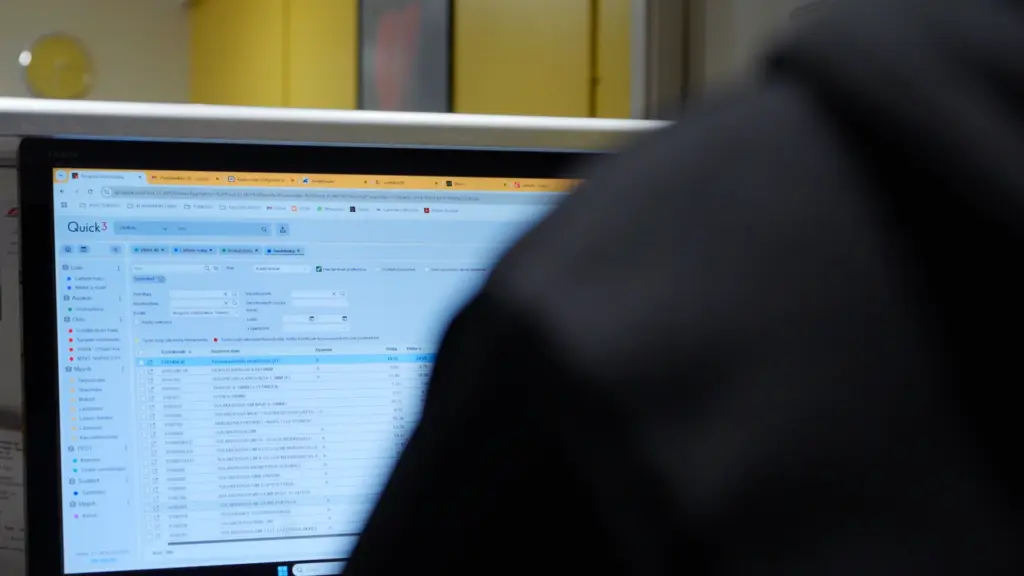
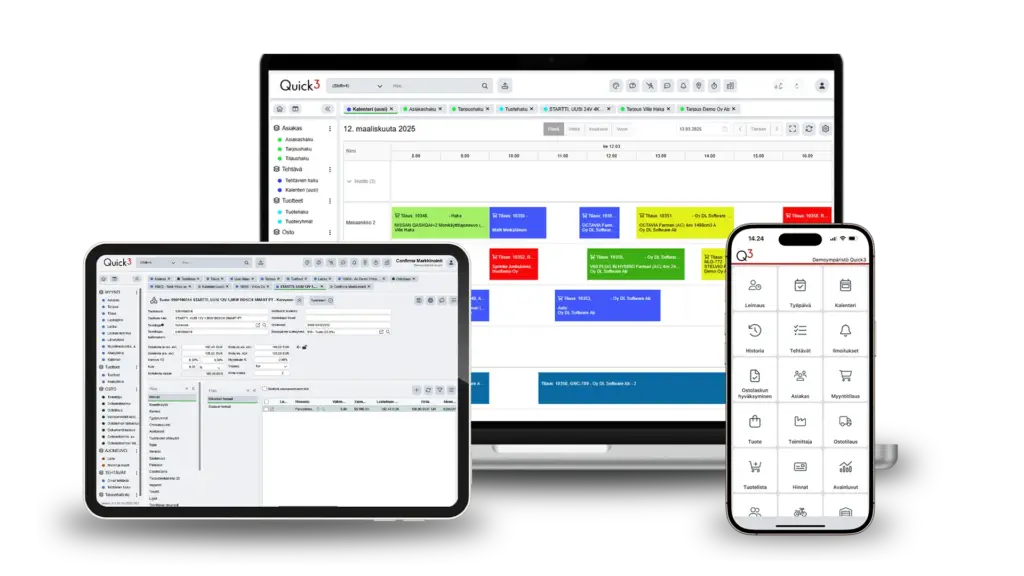
In the Confirman Quick3 system, an unlimited number of work orders, customer records, purchase orders, or other tasks can be open at the same time, and you can switch between them just as you would between browser tabs. Many customers are surprised by how much this feature simplifies their work.
One thing that Confirma’s customers almost without exception highlight is the system’s usability. Confirma’s goal has been to build a system that adapts to the repair shop’s operating practices, rather than requiring the repair shop to adapt to the system’s requirements.
Smooth updates with a browser-based system
The Confirma Quick3 software operates in a cloud-based environment and can be accessed via a web browser or mobile app from anywhere, without the need for local installations. The system also incorporates security measures at multiple levels.
The software operates on a SaaS (Software as a Service) model, meaning the service is paid for through a monthly subscription. The advantage of this model is that all updates are automatically included in the service. New features, improvements, and enhancements are made available to customers without any separate license or update fees.
– When a new version is released, the customer essentially just refreshes the browser window. The new features are available in seconds. The browser-based approach also enables continuous development without major downtime or separate update projects, Haka emphasizes.
The customer logs in to the system, accepts the update, and the new features are immediately available.
Confirma regularly organizes webinars and training sessions on the implementation of new features. Updates are released about once a month, and customers are informed about new features in connection with these updates. In practice, however, not all customers have time to review the update announcements, which is why training and communication play an important role.
A small repair shop, a big advantage
Digitalization is particularly evident in the services offered by spare parts suppliers. Spare parts catalogs now contain significantly more information than mere lists of spare parts. They include, for example, labor hour estimates, maintenance information, and vehicle-specific maintenance schedules.
That is why digital tools can be a crucial asset when a small, independent repair shop is competing with large chains. According to Haka, a competitive advantage stems above all from access to information and integration.
– We do not generate spare parts data or maintenance information ourselves. Our role is to integrate the various services in the industry into a single platform and enable the seamless flow of information between systems.
In the Finnish auto repair industry, the importance of system integration is underscored by the aging vehicle fleet.
– There are many multi-brand repair shops, since older vehicles don’t need to be serviced at brand-specific repair shops. Multi-brand repair shops also have a wide range of choices when it comes to spare parts suppliers, since older cars don’t require the use of the brand’s own original parts. For us, this means we need to ensure seamless connections and ordering channels to all of our customers’ suppliers and other systems.
Versatile integration opens up new opportunities
Haka describes a modern enterprise resource planning (ERP) system as a kind of network hub around which the entire repair shop’s digital operating environment is built. Spare parts suppliers’ catalogs, work order systems, phone systems, appointment scheduling, and customer and vehicle registries can all be integrated into a single platform. A customized solution tailored to each customer’s specific operations can be built.
– We go over with a new customer which services and suppliers the repair shop uses. After that, we set up the necessary integrations so that the existing systems work together seamlessly. “The better the system communicates with other services in the industry, the more efficiently the repair shop can operate,” Haka explains.
Confirma has also implemented integrations with automakers' systems. For example, in the Mazda service network, service data is automatically transferred between the repair shop's and the manufacturer's systems.
– When an authorized Mazda service center performs maintenance on a car, the information can be transferred directly to the manufacturer's systems without the need for separate entries.
Making Even More Effective Use of Business Data
Digital systems not only streamline work but also record data on the day-to-day operations of the repair shop. Haka estimates that analytics based on data collected from various areas of the repair shop are still used relatively little in business development. Typically, the necessary reports are submitted to accounting, which provides an overview of how things have gone.
However, there are many more possibilities than that.
– For example , Quick3 can be integrated with a Business Intelligence tool that allows you to view inventory turnover in real time and use that data to optimize your inventory. Or you can analyze the time spent on maintenance tasks to identify staff strengths and organize training in the necessary areas.
When it comes to sales, it is possible to get a comprehensive view not only of the big picture but also of individual spare parts and, for example, their gross margin structure. This allows for changes to pricing that improve profitability. On the purchasing side, you can see, for example, by supplier, product category, and product, where purchases have been most profitable.
The size of a repair shop has a significant impact on how effectively data generated from different areas of the business is utilized. It doesn’t have to be this way - according to Haka, even smaller repair shops today have a good opportunity to capitalize on the data generated by their own operations.
