

In recent years, e-commerce accessibility has become an increasingly important part of digital service design. Accessibility is no longer just a best practice, but also a legal obligation: the E-Commerce Accessibility Directive introduces specific requirements that consumer e-commerce sites must meet by June 2025.
In this blog post, we’ll explain what online retailers need to know about the Accessibility Directive, as well as the requirements the directive imposes on e-commerce technology and content production. We’ll also explain why it’s a good idea to incorporate accessibility into the development of an online store early on.
What is the Accessibility Directive?
The Accessibility Directive, also known as the European Accessibility Act, is an EU-wide regulation aimed at improving the accessibility of products and services for everyone, regardless of physical or cognitive abilities. It promotes equality and facilitates the use of digital services across Europe.
In Finland, the Accessibility Directive has been implemented through amendments to the 2019 Digital Services Act. The amendments, which took effect in 2023, also brought many private-sector consumer services, such as online stores, within the scope of the law. Online stores play a particularly central role, as they have a broad user base and purchasing transactions are largely based on independent interaction in a digital environment.
What Does E-Commerce Accessibility Require?
Under the Digital Services Act, all new online stores targeting consumers must meet accessibility requirements starting June 28, 2025. Online stores launched before this date are subject to a five-year transition period. The accessibility requirements do not apply to online stores operated by microenterprises.
– Technical requirements: The online store must meet the accessibility criteria set forth in the European standard EN 301 549, which are largely based on the WCAG guidelines.
– Accessibility Statement: The online store must include an accessibility statement that describes, among other things, the current state of the service’s accessibility and any deficiencies.
– Feedback on accessibility: Users must be given the opportunity to provide feedback on accessibility, and this feedback must be addressed within 14 days.
What does an accessible online store mean in practice?
The accessibility of an online store can be divided into two areas: the technical accessibility of the online store and the accessibility of its content. In practice, technical accessibility means that, for example, the site’s structure and navigation support smooth use with a keyboard, a screen reader, and mobile devices. When it comes to content, the key factors are understandable language and a logical presentation.
Going forward, online stores should therefore take into account the following specific accessibility elements, for example:
– Alternative text for images (alt text)
– Sufficient color contrast between text and background
– Online store navigation using a keyboard
– Logical and easy-to-understand page structure
On e-commerce platforms where accessibility has already been incorporated into the technical implementation, meeting these requirements is often much smoother.
How has Confirma prepared for the Accessibility Directive?
The e-commerce sector has only really begun to take the Accessibility Directive seriously as the deadline approaches. At Confirma, accessibility has been an integral part of our e-commerce development work for years - in particular, the expertise we’ve gained through our group’s public-sector clients has given us a strong foundation for building accessible software solutions that also meet the needs of the private sector.
When accessibility is already factored into the structure and design principles of an online store, implementing it does not require separate rounds of revisions. This gives our customers a head start and reduces risks as regulations become stricter.
Why is it important to consider accessibility now?
Although existing online stores have been granted a transition period, it’s a good idea to start thinking about accessibility well in advance. Online store accessibility isn’t just a requirement - it’s also an important competitive advantage:
– A broader customer base: An accessible online store serves a wider range of users, thereby expanding the potential customer base.
– A better user experience: A clear and easy-to-use online store improves the shopping experience.
– Better conversion rates: A positive customer experience is reflected, for example, in a reduction in shopping cart abandonment and an improvement in the conversion rate.
– Search engine visibility: Accessibility elements are one of the criteria search engines use to determine visibility.
– Sustainability and Brand: Accessibility builds trust and reinforces a positive brand image.
At Confirma, accessibility has been an integral part of our comprehensive e-commerce design process even before the Accessibility Directive took effect, giving our customers a significant head start.
Are you looking for some guidance on accessibility?
If you want to ensure that your online store meets accessibility requirements, we’d be happy to help - whether you’re developing your current online store or looking for a platform that’s already built with accessibility in mind.
How can an online retailer prepare for accessibility requirements?
It’s a good idea to start preparing for the E-Commerce Accessibility Directive now. This way, you can address any potential areas for improvement in a timely manner and avoid last-minute rushes.
✅ Checklist: 6 Steps to Comply with the Web Accessibility Directive
- Assess the current situation: Determine how your online store currently meets accessibility requirements - both technically and in terms of content.
- Verify the platform's technical capabilities: Make sure your e-commerce platform supports accessibility requirements - particularly the EN 301 549 standard.
- Ensure content accessibility: Train content creators on the importance of clear language, alt text, and logical structure.
- Create an accessibility statement: Prepare an accessibility statement for your online store that describes the current state of the service's accessibility and any potential limitations.
- Set up a feedback channel: Create an easy way for visitors to provide accessibility feedback—such as a feedback form. Be sure to respond to feedback within 14 days.
- Stay up to date: Accessibility isn't a one-time project. We'll make sure the platform's technical implementation stays up to date - all you need to do is focus on your content.
More information on regulatory requirements
The website saavutettavuusvaatimukset.fi, maintained by Traficom, provides comprehensive information on the background of the Accessibility Directive, the requirements of the Digital Services Act, and how compliance with accessibility standards is monitored in Finland.
Confirma's e-commerce solutions comply with the requirements of the Accessibility Directive

Online Retail and Wholesale
Confirma Flowvy is a versatile e-commerce solution that adapts to the needs of various retail and wholesale businesses. The platform’s underlying architecture already complies with the technical requirements of the Accessibility Directive, so there is no need for major separate updates. The Flowvy e-commerce platform offers a seamless shopping experience for all users and integrates effortlessly with various software systems, such as ERP and point-of-sale systems.
Online Store for Sports and Fitness Centers
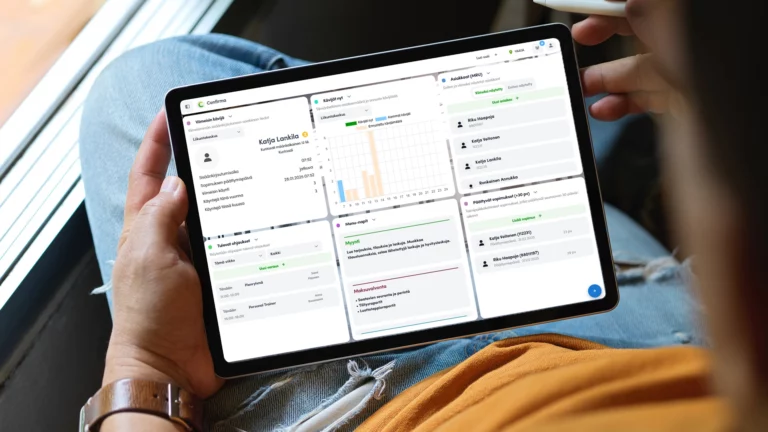
The Confirma Active fitness center software online store offers your customers an easy way to purchase memberships, single-visit passes, and services—anywhere, anytime. The online store’s checkout process is designed to be seamless for all types of users, in compliance with the requirements of the Accessibility Directive. Our online store integrates seamlessly with customer management, access control, and billing systems, among others.
