
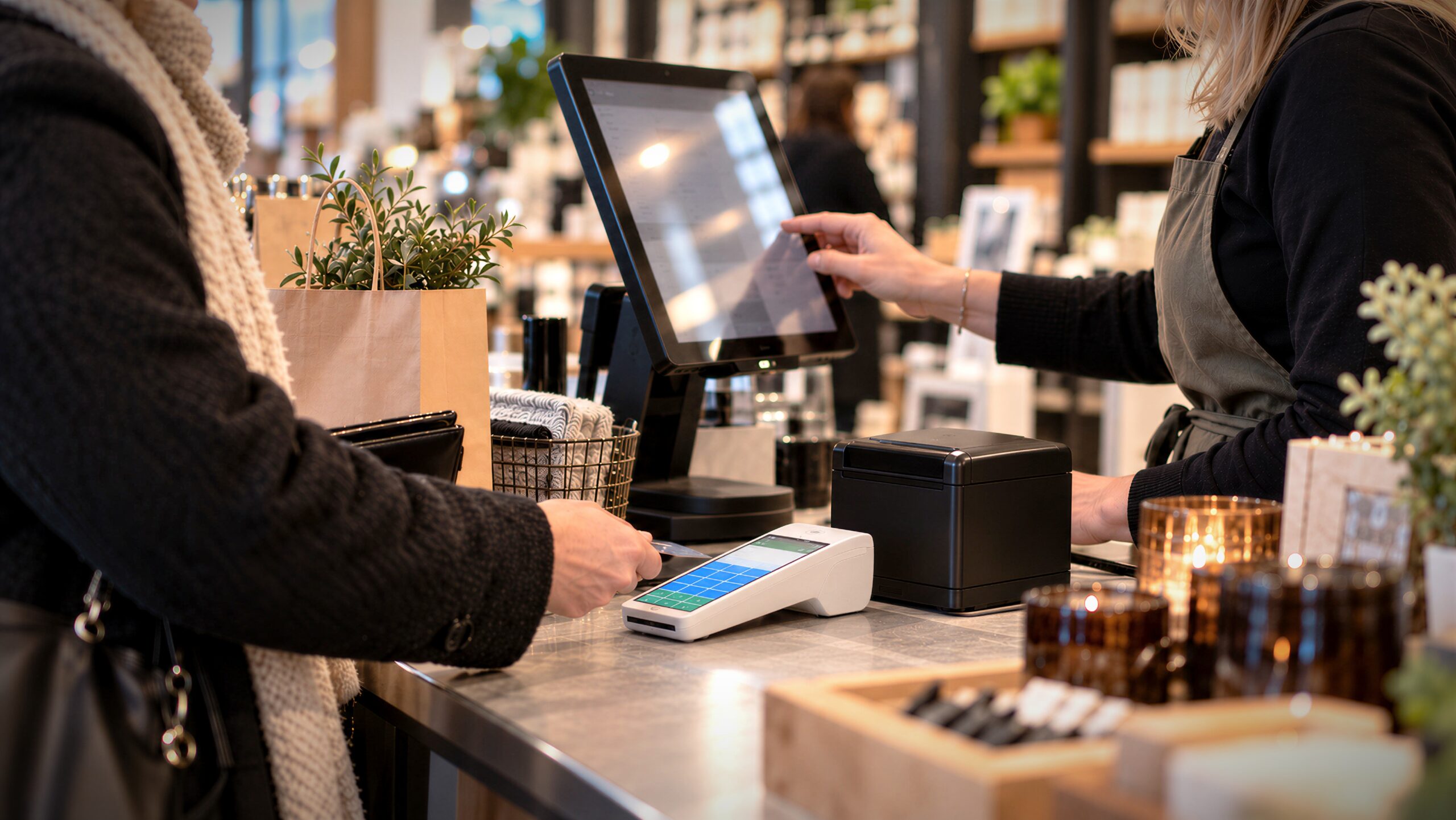
The cost of a point-of-sale system is a concern for many people looking for one, and rightly so. There are many options on the market, with features and cost structures that vary widely. Nowadays, many simpler solutions, such as mobile payment terminals, may be referred to as point-of-sale systems, even though in reality they include only a small portion of the functions of a complete system.
A comprehensive point-of-sale system helps manage sales, products, inventory, customer data, and reporting. It consists of software, POS hardware, and the necessary services. Basic POS solutions may suffice for small-scale sales, but they often aren’t suitable for larger operations where speed and reliability are key. When growth is the goal, it’s worth choosing a system that supports day-to-day operations in the long term - and quickly pays for itself through time savings and increased efficiency.
The price of a point-of-sale system isn’t just a single figure, but rather a total cost made up of several components. In this blog post, we’ll clearly explain what the price of a point-of-sale system actually consists of and what factors you should consider when making your choice.
The 4 Building Blocks of POS System Pricing
1. Point-of-sale software: What do you pay for, and what do you get?
Point-of-sale software is the most important part of the entire POS system: without functional software, there is no functional POS. The software’s features directly affect how efficiently your business can handle sales, reporting, and customer service. At the same time, they are one of the most significant factors affecting the price of a POS system.
In practice, every point-of-sale software program should include at least the following basic functions:
– Point-of-sale app
– Payment terminal integrations
– Sales tracking and reporting
– Inventory management
Once the basics are in place, the point-of-sale system is easy to expand as needed. You can also implement features such as loyalty programs, invoicing, or sales order processing. These additional features can significantly streamline day-to-day operations: customers receive more personalized service, sales tracking becomes easier, and orders are better managed - though they also affect the cost of the POS system. It’s worth considering the system’s flexibility when purchasing a POS system, especially if you plan to expand your business in the future.
2. Cash registers: an essential part of the price of a point-of-sale system
A point-of-sale system is rarely just software: physical POS terminals are almost always required as well. POS terminals affect not only the user experience but also the components of the point-of-sale system’s price.
There are a few decisions to make when purchasing point-of-sale equipment: Should you buy it outright, rent it, or use a finance lease? Should you buy new or used equipment? Do you need one or more checkout stations? These decisions have a direct impact on the cost of the POS system and how smoothly it operates on a day-to-day basis.
Typically, when setting up a point-of-sale system, at least the following POS devices are purchased:
– Point-of-sale device (computer, tablet, etc.)
– Receipt printer
– Integrated or standalone payment terminal
– Customer display
– Surge protector or backup power supply
– Barcode scanner
– Cash drawer
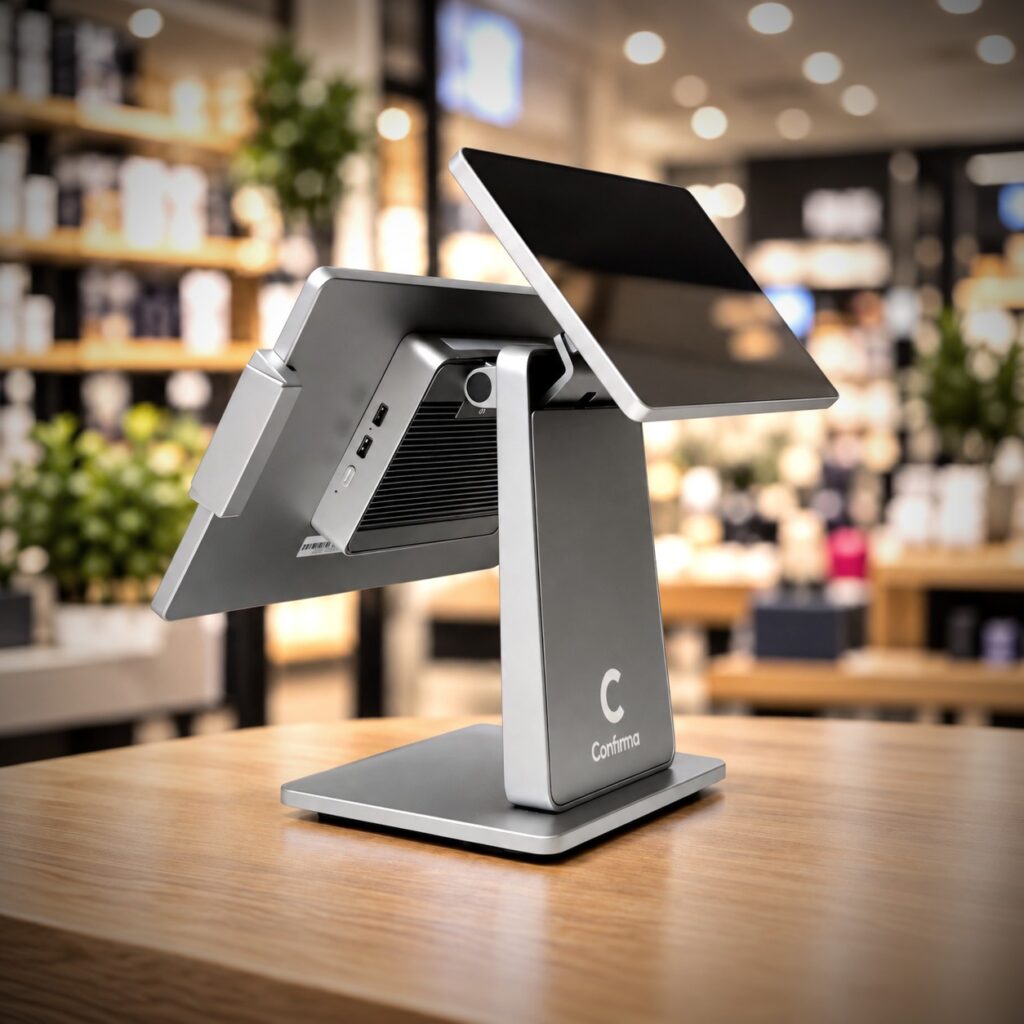
The necessary point-of-sale equipment depends largely on the industry and sales volume. Many people start out using their own devices, such as tablets, which can be a cost-effective solution for light use. However, it’s worth noting that consumer devices aren’t designed for continuous use: they slow down and break more easily, meaning they’ll need to be replaced sooner. Point-of-sale systems designed for professional use are faster, more durable, and reliable even when sales are at their peak. In addition, they often come with more comprehensive warranties. If your goal is a smooth daily workflow and reliable equipment, we recommend choosing POS systems designed for professional use.
Also keep in mind the card transaction fees charged by payment terminal providers. In addition to the costs of the POS system, it’s important to consider the transaction fees - that is, the commissions on card payments - charged by payment terminal providers. These are not included in the price of the point-of-sale system but directly affect your sales costs. Fees may vary depending on the provider and payment method, so it’s worth looking into them when purchasing a point-of-sale system.
3. Support and Maintenance: A Hidden Cost or an Essential Part of the POS System's Price?
When choosing a point-of-sale system, people often talk about software and hardware, but it’s just as important to consider the services included in the price of the system. Implementation, training, and support directly affect how smoothly the point-of-sale system works in practice.
Implementation is the first concrete step after purchasing a point-of-sale system. Does the price include the installation of the software and hardware, or setting up the products in the POS system? With some systems, the customer does everything themselves; with others, an expert provides assistance - either remotely or on-site. The duration of the implementation varies depending on the scope of the system and the company’s needs, ranging from a few hours to longer projects, and it is often billed on an hourly basis. With us, you can have your point-of-sale system up and running in as little as a couple of days.
Training ensures that you get the most out of your point-of-sale system, especially when there are multiple users or the system has a wide range of features. Training can be conducted remotely or in person, and its scope varies depending on the provider. At Confirma, we prefer in-person training whenever possible: interactive, personalized guidance ensures that all questions are answered, thereby saving time in the long run.
Ongoing support and maintenance are things whose value you often don’t realize until something goes wrong. Even during the procurement phase of a POS system, it’s important to clarify what the support includes, when assistance is available, and whether, for example, software updates are included in the price of the POS system. Software that evolves alongside your business is the most cost-effective choice in the long run.
At Confirma, support is readily available thanks to our extensive network of local resellers and our own support team. We provide expert assistance quickly, whether you need help with implementation, additional training, or troubleshooting.
4. Integrations and Additional Features: How Do They Affect the Price of a POS System?
Few businesses need just a point-of-sale system anymore. More and more often, companies are looking for a comprehensive solution that supports their business more broadly. Integrations and additional features make day-to-day operations easier and reduce manual work, but they also affect the cost of the point-of-sale system.
The most common systems to which point-of-sale systems are connected are:
– Systems for wholesalers and suppliers
– Appointment scheduling systems
Integrations can be off-the-shelf or custom-built. This affects not only the length of the implementation process but also the total cost of the POS system. At Confirma, you’ll find a wide selection of off-the-shelf integrations, which speed up implementation and keep costs under control. If your business requires something completely unique, the POS system can also be expanded with custom features via APIs. This ensures that the POS system works seamlessly with the very tools your company already uses.
Industry-specific features further enhance the system. Restaurants may need seating charts, kitchen messages, or a table ordering system, while retail needs often involve, for example, inventory management, serial number tracking, or cash register calculations. We’ve already taken these needs into account in our industry-specific solutions - so that the POS system works right away in real-world situations.
How is a point-of-sale system paid for—rental, lease, or purchase?
There are several ways to acquire a point-of-sale system, and the right solution depends on the company’s situation, cash flow, and how long-term the solution is intended to be. It’s often helpful to consider the financing options for the software and the POS hardware separately, as they can differ significantly.
Renting a point-of-sale system is a flexible, low-risk solution for a wide range of businesses. With this option, you pay for the POS software and hardware only for as long as you use them. Leasing is a safe option, especially for companies with limited in-house IT expertise: for example, if a POS terminal breaks during the lease period, you’ll immediately receive a replacement. Renting a POS system from Confirma gives you the freedom to experiment and grow: the system can be modified or expanded as needed, and you can cancel the contract with a short, 3-month notice period.
Leasing a point-of-sale system is very similar to renting one, but at the end of the contract period, the business can choose to purchase the equipment for a small fee. The contract is entered into for a predetermined period, during which the equipment is available for the company’s use at a fixed monthly rate. Leasing can be a good option if there is a long-term need for the system and you want stability in your monthly expenses, but purchasing the point-of-sale system is not a suitable option.
Purchasing a point-of-sale system is a sensible option when there is a clear, long-term need for the system and no major changes are on the horizon. This option often requires a larger initial investment, but in the long run, it can be a cost-effective solution for an established business.
What about a commission-based point-of-sale system?
In some situations, it makes more financial sense to implement a point-of-sale system without a fixed monthly fee and to pay for its use solely based on a percentage of sales - that is, a commission. A commission-based POS system can be a suitable option, especially for a startup or a seasonal business, when the goal is to keep fixed costs as low as possible. Typically, the commission model covers a basic package, and as the system expands, the business transitions to a more fixed pricing structure.
Which financing model would be best for your business?
The price of a point-of-sale system is determined by several factors
When comparing different point-of-sale systems and prices, it’s more important to understand the big picture than to focus on a single euro amount. The questions below will help you understand what the price of a point-of-sale system actually consists of and what will best serve your specific business:
- Point-of-Sale Software – What features are included in the software, and which ones require an additional fee? What do you need right away, and what can you add later?
- Point-of-Sale Equipment – Do you need to buy, rent, or lease the equipment? How many POS terminals does your business have?
- Support and Implementation – Are implementation, customer support, and updates included in the price, or are they billed separately?
- Integrations and Connections – Do you need connections to, for example, an online store, an ERP system, or financial management software?
- Industry-Specific Needs – Does the system come with the specialized features your industry requires?
- Financing Model – Do you want to pay monthly, in a lump sum, or do you want the option to buy the equipment outright?
- Notice Period – Are you committing to a long-term contract, or is it possible to cancel the service flexibly?
Once you have a clear understanding of these factors, you’ll be able to compare systems more effectively and make a decision that supports both the smooth running of your day-to-day operations and your company’s growth. Remember that a good point-of-sale system isn’t just an expense—it’s a tangible asset that supports your business.
