

There’s plenty to keep you busy in the day-to-day operations of a business: sales take time, customers need to be served, and there’s an endless stream of administrative tasks running in the background. Often, the same information is entered in multiple places, reports are compiled by hand, and information moves slowly from one person to another. As a business grows or becomes more complex, individual tools - such as emails, Excel spreadsheets, or sticky notes on the edge of your desk - are no longer enough to keep everything together.
Many companies eventually realize that their day-to-day operations need more structure - something that helps keep the various aspects of the business under control and ensures that information flows where it’s needed. At this point, the question often arises: Could an ERP system be the solution to bringing more clarity to your business operations?
In this blog post, we’ll explain what an ERP system is, when it’s worth implementing, and how it can bring clarity, predictability, and growth opportunities to your business.
What is an ERP system?
Many people have heard of an ERP system, but its significance for business operations may not be clear. An ERP system—or enterprise resource planning system - is one of a company’s most important tools when it comes to efficiently managing multiple areas of business operations within a single system.
An ERP system integrates, for example, sales and purchasing, order management, inventory, customer data, and financial management into a single system. When information flows seamlessly between different functions, day-to-day operations become more streamlined, errors are reduced, and decision-making is accelerated. An ERP system supports a company’s daily operations and provides a strong foundation for growth and profitable business.
Why is it a good idea to implement an ERP system early on?
The benefits of an ERP system are most evident when business is active and many things are happening simultaneously: sales, purchasing, service delivery, customer service, and reporting. The more moving parts there are in your business, the greater the need to ensure that everything works together seamlessly. An ERP system acts as the backbone that connects day-to-day operations with the big picture of your business - it brings continuity, rhythm, and reliability to your operations. An ERP system designed for your industry ensures that operations remain under control even as the workload increases or personnel change along the way.
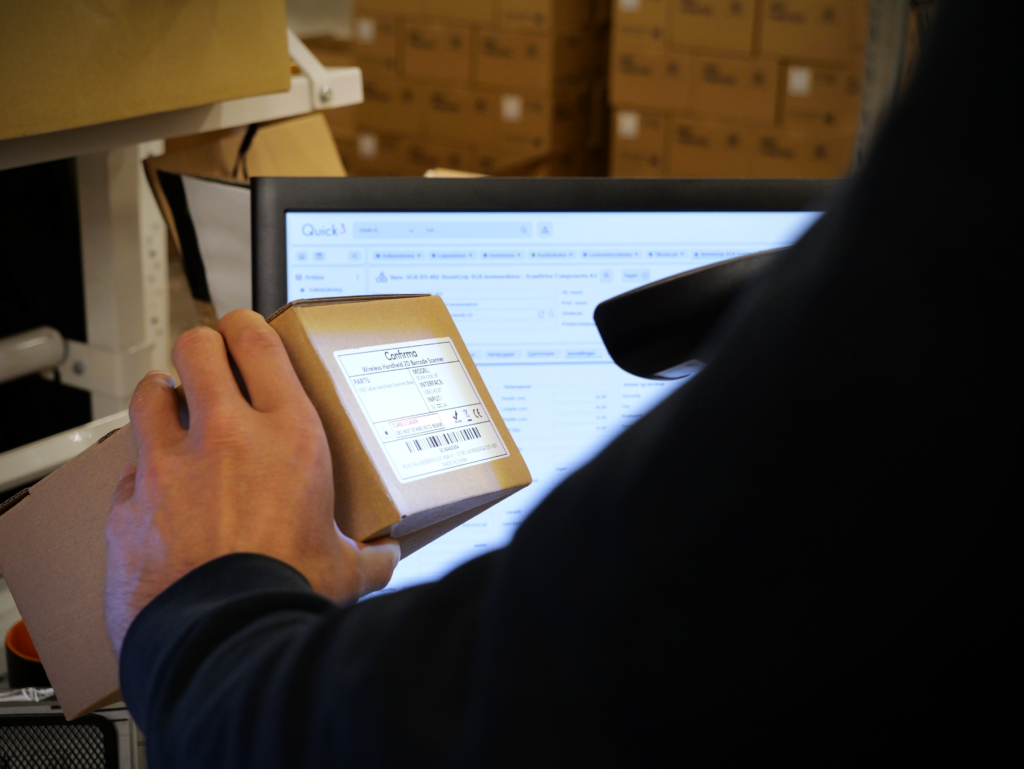
Are you looking for an ERP system for your company?
Confirma's comprehensive ERP solutions help you keep a firm grip on your business. When all the functions you need are in a single system, managing your business becomes easier, more efficient, and more transparent.
An ERP system is no longer just a solution for large companies
ERP systems have traditionally been used primarily by large companies with many functions and processes to manage. However, with the advent of cloud-based solutions, even small and medium-sized businesses can now implement agile and easily scalable ERP systems - without the need for complex projects or major investments.
More and more companies are choosing an ERP system to support their business operations - one that streamlines daily work, eliminates duplication of effort, and brings essential information together in a single view. Implementing an ERP system does not mean completely overhauling the entire organization - at its best, it supports existing operating models and helps develop them in a controlled manner.
When is an ERP system the right choice for a company?
You should implement an ERP system no later than when running your business and day-to-day operations start to take up too much of your time, or when you find yourself doing the same tasks manually over and over again.
Signs That It's Time for Your Company to Implement an ERP System
✅ There are several separate systems in use that do not communicate with one another.
✅ Information is scattered, and it takes time to find it.
✅ The most important business functions run on different systems.
✅ The same tasks are repeatedly performed manually, even though they could be automated.
✅ Customer service or the supply chain is hindered by a lack of information flow.
Implementing an ERP system is easier than you thought
Contrary to popular belief, a modern ERP system does not require a complex implementation process or weeks of training. Cloud-based ERP solutions are quick to implement and scale flexibly to meet the varying needs of businesses.
If necessary, you can start small - for example, with customer management and invoicing - and roll out new features later. A modern ERP system adapts to your company’s ways of doing business, not the other way around.
5 Reasons to Implement an ERP System Early
- All your data in one place - customer information, orders, inventory, and billing are all available in a single system
- Less manual work - fewer errors, greater efficiency
- Greater visibility into business operations - real-time data supports decision-making
- Ready for Growth – The Right ERP System Grows Alongside Your Business
- Consistent procedures for all employees - an ERP system helps ensure that everyone uses the same processes and up-to-date information
Where should I start?
Choosing the right ERP system always starts with identifying your needs. Think about which day-to-day processes take the most time or create unnecessary work - that’s where an ERP system can deliver immediate, tangible benefits.
Confirma’s ERP solutions are designed to support the day-to-day operations of businesses of all sizes. We offer a range of scalable ERP systems that cover all key functions in one place. Each of our systems has its own specific strengths, allowing Confirman’s solutions to flexibly adapt to the varying needs of different industries and companies.
