
Blog updated on December 22, 2025
A property management system is a property manager’s most important tool and the heart of the entire office. When it works, day-to-day operations run smoothly, information flows freely, and customers receive high-quality service. But if the system can’t keep up with the changing needs of property management, the workload increases rapidly - and that shows in customer service as well.
Choosing the right property management system is one of the most important decisions a property management company makes. It affects work efficiency, communication, the customer experience, and how fulfilling one’s work feels.
💡In this article, we've compiled 6+1 tips to help you choose a property management system that truly supports your day-to-day property management tasks.
1. Choose a complete system, not a collection of programs
Property management and accounting are not separate worlds but two sides of the same coin. That is why a property management system must also support both seamlessly.
When property management and accounting operate within a single system, information stays up to date and can be found in one place. Work isn’t scattered across multiple programs, and no time is wasted on manual file transfers. The entire team sees the same big picture, and operations remain transparent and manageable.
A good property management system is built around the day-to-day operations of property management - when accounting is part of its core functionality, the system works seamlessly and supports your work every day.
2. Automate everything that doesn't require human intervention
Day-to-day property management involves many repetitive and time-consuming routines. While these are necessary, they are rarely the tasks that require the most of a property manager’s time. It is precisely in these tasks that automation offers the greatest benefit.
A well-designed property management system automates routine tasks: it retrieves bank data, posts invoices, generates reports, and updates information automatically without any manual transfer steps.
The purpose of automation is not to replace people, but to support them. When the system handles repetitive processes, you can focus on what you do best: managing housing companies and interacting with customers.
3. Look Beyond the Surface at the Costs of a Property Management System
The cost of a property management system is an important factor in the decision, but the monthly fee alone doesn't tell the whole story. Pricing models vary widely, and a system that seems affordable at first can end up being expensive once day-to-day operations are in full swing.
That’s why it’s important to look beyond the surface: what’s included in the price, and what’s billed separately? In some systems, for example, the processing and archiving of purchase and sales invoices, the sending of e-invoices, and the retrieval of bank data are billed separately - often on a per-transaction basis. When each action incurs its own cost, the total bill can come as a surprise. So, if necessary, run the numbers using actual amounts for receipts, e-invoices, and so on.
Transparent and predictable pricing is a sign of a well-designed property management system - one that supports the work without hidden costs or surprises.
4. Information security and reliability are the foundation of the hosting system
Property management involves handling the most sensitive information of housing companies and residents on a daily basis - financial data, personal information, contracts, and contact details. That is why information security must not be an optional feature, but rather the foundation of the entire property management system.
In a reliable hosting system, information security is audited, all data is protected, and usage is traceable. Since access rights can be precisely restricted based on roles, each user sees only what falls within their area of responsibility. Automatic backups ensure that data remains secure in all situations.
When information security and operational reliability are in order, the most important thing emerges: trust, upon which the entire property management service experience is built.

Are you looking for a property management system for your company?
You’ve come to the right place - we offer the modern, browser-based Confirma Disponent property management system, which feels like a natural fit right from the start. Our property management solution combines property management, financial management, and communication into one clear, integrated system. All key information and tools are available regardless of time or place - exactly when you need them.
If you're considering starting a new property management company or if your current system no longer meets your changing needs, please contact us.
5. Support is part of the value of a good property management system
In the property management profession, schedules are often tight. If a problem arises with the system, it’s important to get help quickly and in a way that’s easy to understand.
A good property management system doesn’t leave the user on their own. Support services must be easily accessible, and they must be staffed by people who understand the workflows and realities of property management. General IT support isn’t enough when it comes to a housing association’s accounting or administration - that’s when industry-specific expertise is needed.
Expert support is part of the value of a property management system. When support staff speak the same language as the customer and assistance is available at no extra cost, problems are resolved quickly. This way, the system supports day-to-day life even when things don’t go according to plan.
6. A jointly developed property management system works best
The work of property management is constantly changing - legislation, regulatory reporting, and customer expectations are always evolving. The system must keep pace with these changes, which is why its development should take place in collaboration with industry professionals.
When feedback from property managers and practical observations guide the system’s development, the end result genuinely improves day-to-day operations. Even small changes can make work run more smoothly - faster views, clearer reports, or fewer clicks.
Transparency in development says a lot about a system provider. When customer feedback is taken seriously and leads to visible changes, it builds confidence that the property management system is evolving in step with the industry.
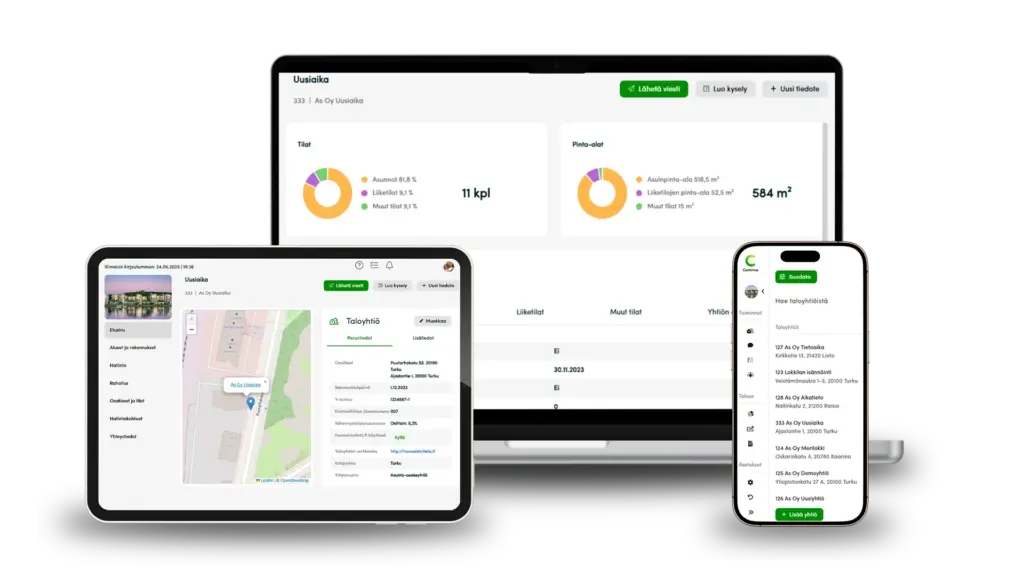
The Confirma Disponent property management system meets expectations
Confirma Disponent is built around the day-to-day operations of property management - based on the very principles discussed in this blog. It seamlessly integrates property management and accounting, automates routines, ensures data security, and provides its users with truly effective support.
We are constantly developing Confirma Disponent in collaboration with property managers to ensure it meets the industry’s real needs—not just technical requirements. Based on genuine collaboration, we’ve created a comprehensive system that makes property management smoother, more reliable, and, above all, less burdensome.
💡 Bonus tip: Don't forget the residents and shareholders
A good property management system doesn't just serve the office - it supports the day-to-day life of the entire housing community. That's why it should also provide residents and unit owners with an easy and up-to-date way to manage housing-related matters - such as maintenance fees and notifications.
When the resident portal works truly seamlessly, the property management service is also perceived as better. A clear user interface, easily accessible information, and mobile access make everyday life easier, build trust, and reduce the number of repeat inquiries.
Read our blog to find out why it's worth investing in digital resident communication
